
MRP · Material requirements planning
What to buy, make or move, and the day it is needed.
Every night, and whenever you press Recalculate, one run goes through each item in each warehouse, day by day: what is on the shelf, what is on its way, what customers ordered, what you forecast and what the products you make will take. Where stock would fall short it writes a proposal for that day. It orders nothing by itself: a person, or an AI employee within what you allowed, turns proposals into draft orders.
1 · What it counts
Everything that moves stock, on its date.
The run reads the same documents the books are kept from, so the plan and the stock ledger never disagree about what is coming.
Stock on hand
What each warehouse holds today, item by item.
Sales orders
What customers ordered and is still to be delivered, on the delivery date the order promises. A kit counts as its components.
Purchase and production orders
Purchase lines on the date they are expected. A production order takes its components on the day it starts and brings its product when its lead time ends.
Drafts too
Draft purchase orders, production orders and transfers count beside confirmed ones, so a proposal you already turned into a draft is not proposed again.
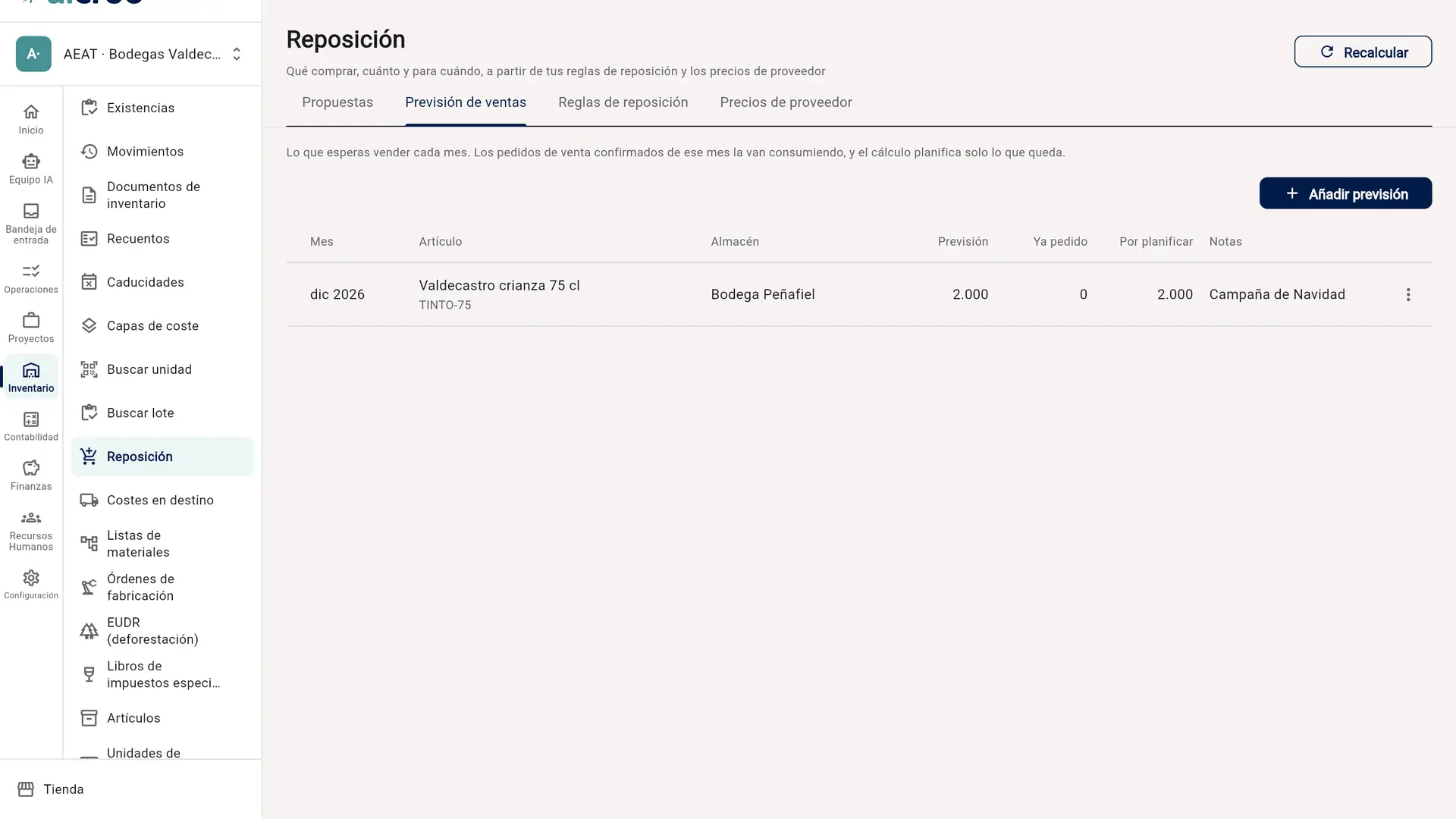
A sales forecast
What you expect to sell, per item, warehouse and month. The month’s sales orders use it up, so what is already ordered is not counted twice.
Safety stock
A reorder rule’s minimum is the level stock may not fall below on any day, and its maximum what to order up to. Without a rule, the run proposes exactly the shortfall.
Under control
It proposes and never orders. A proposal becomes a draft only when a person confirms it, or an AI employee you allowed to.
2 · On its date
A sale in March is planned for March.
The run walks each item’s days in order. The first day stock would fall below its safety level is when the proposal is due, not today plus a lead time.
One proposal covers what follows
Due on the first shortage, sized so no later day falls short either, then rounded to the supplier’s minimum and the rule’s multiple.
A late delivery is brought forward, not bought twice
Stock already on order counts as available when it is needed. If it lands after the sale it covers, the proposal says so, with the day to bring it forward to.
Late, when it cannot be there
What cannot arrive before the day it is needed is still proposed, for the earliest day it can, and marked late so someone decides in time.
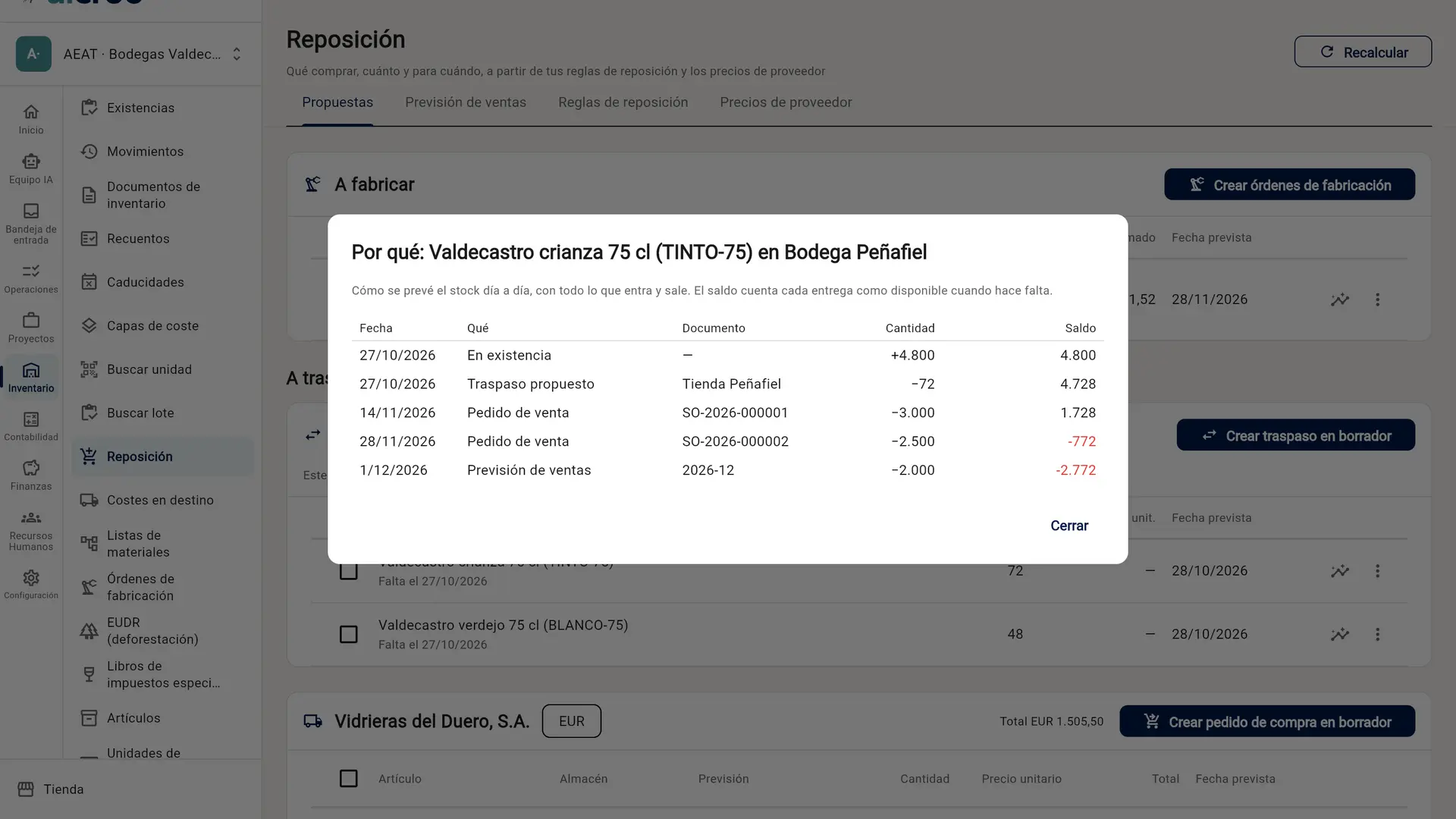
The reason, one click away
Each proposal opens its day-by-day projection: every order, receipt and forecast behind it, with the balance after each one.
3 · Make or buy
Level by level, down every bill of materials.
A product is planned before the parts that go into it, so when a component is planned every product that uses it has already said how much it needs, and on which day.
Made, with an estimate
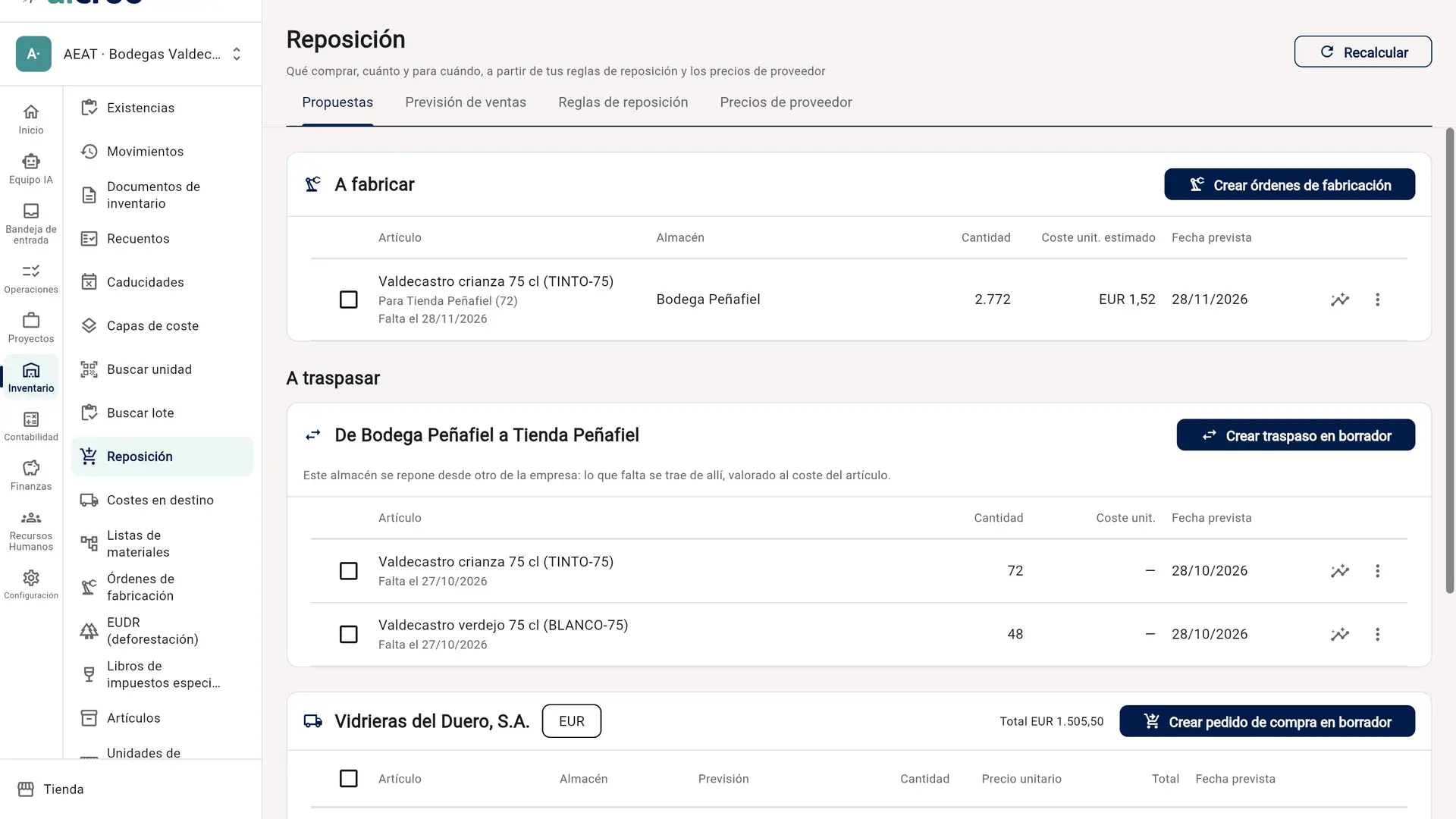
An item with an active bill of materials is made: priced from its components at cost, normal scrap, labour, overhead and any subcontracted work, less its by-products.
Bought, at the supplier’s price
Anything else is bought from its preferred supplier, else the cheapest for that quantity, else the last one, at that supplier’s price and minimum.
Components on the day the product starts
A planned make asks for its components on its start date, its lead time before it is due, so a sub-assembly and its own parts are planned in the same run.
Components from another warehouse
A bill of materials can take its components from a warehouse other than the one the product is made in, and the plan asks for them there.
4 · Warehouses
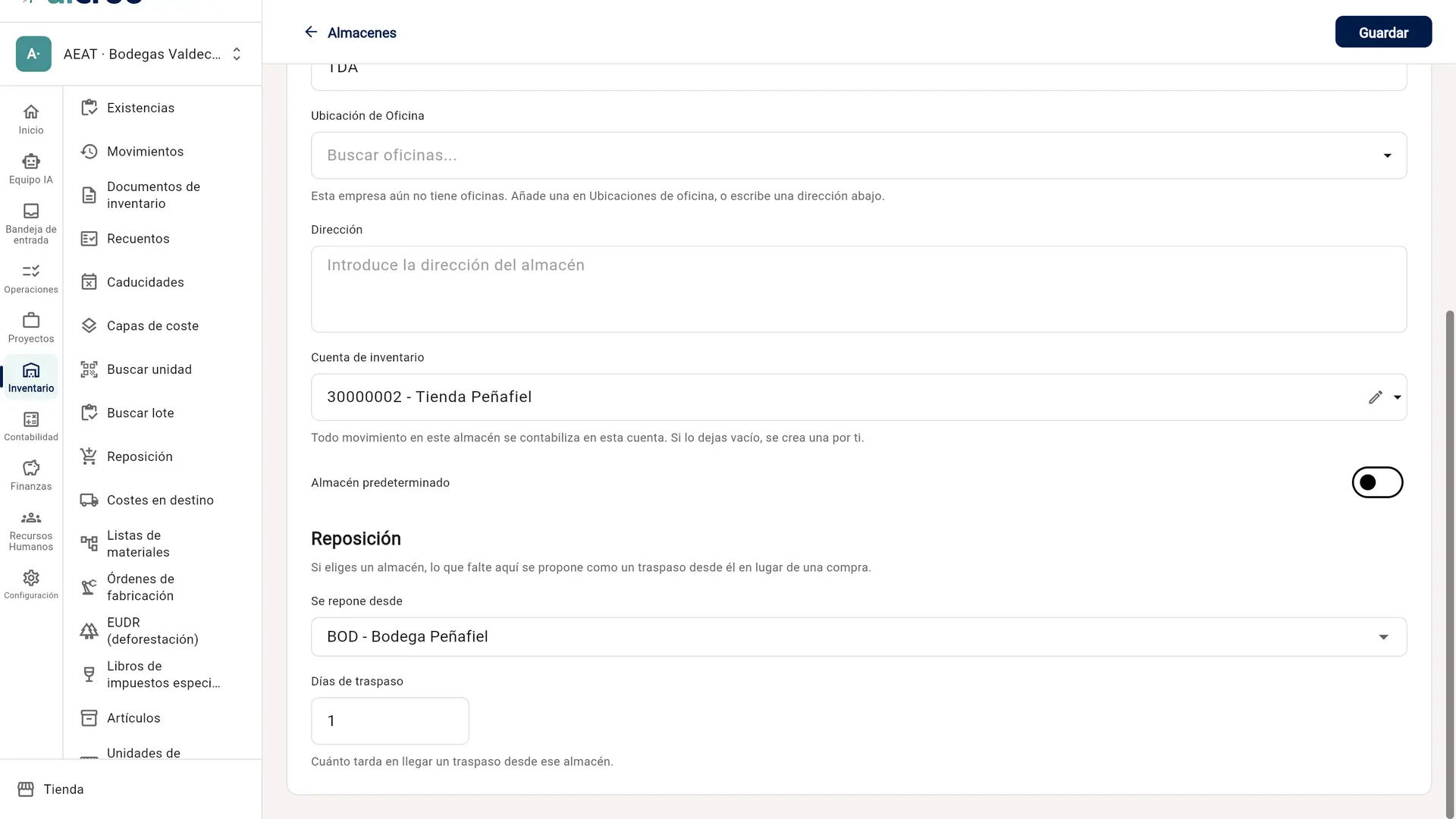
A shop resupplied from the central warehouse.
Tell a warehouse which one resupplies it and how many days a transfer takes. Its shortfalls become transfer proposals, and the central warehouse plans them as its own demand.
The source plans it too
What the central warehouse cannot send, it buys or makes, on the day the transfer has to leave.
One draft transfer per pair
Confirmed transfer proposals become draft warehouse transfers, one per pair of warehouses, dated when they have to leave.
No loops
A chain that would bring a warehouse back to itself is refused when you set it.
Under control
Only where you set it. A warehouse with no resupply source buys or makes for itself, and stock in another warehouse never covers it silently.
5 · To draft orders
From proposal to draft order in one click.
Each kind of proposal has its own confirmation, and its own AI employee where there is one.
Buy: one draft purchase order per supplier
Priced from the supplier’s record, each line with its warehouse and expected date. Payables can prepare them for you.
Make: one draft production order per proposal
From the item’s bill of materials, planned on the day it has to start. The Operations Director prepares each one for you to approve.
Move: one draft transfer per pair of warehouses
From the warehouse that resupplies the one running short.
Yours stays yours
A quantity you changed is kept by the next run. A dismissed proposal is not proposed again before the next day’s run, and one nothing needs any more disappears.

Worked by Operations Director
Under control
Every AI employee starts behind your approval, and prepares drafts alone only once you raise it, after 20 of its proposals in 90 days, 95 % approved unchanged. A draft production order holds no components until a person confirms it.
Why inside the ledger
The plan and the books are the same stock.
Nothing proposed twice
Drafts count as supply as soon as they exist, so confirming a proposal is never followed by the same proposal tomorrow.
Costed the way it will be booked
A make is estimated from the same item costs and rates the production order will book through the change-in-inventory accounts of the Spanish chart.
One run, every night
The same run behind the Recalculate button runs for every company overnight, so the morning starts with today’s proposals.
See next month planned.
Book a demo and bring a bill of materials and the orders behind it.